The Worst Advice We've Received On German Driving License Require…
German Driving License Requirements: A Comprehensive Guide
Getting a driving license in Germany can be an uncomplicated process if potential drivers are well-informed about the requirements and treatments involved. This blog site post intends to guide you through the essential steps, documents, and guidelines surrounding the German driving license, as well as dealing with typical questions surrounding the subject.
Types of German Driving Licenses
Before diving into the requirements, it is essential to understand the different kinds of driving licenses available in Germany. The most common categories include:
| License Category | Description | Minimum Age | Valid Vehicles |
|---|---|---|---|
| Class B | Standard license for vehicles | 18 years | Cars and trucks up to 3,500 kg and up to 8 travelers |
| Class A | Motorbike license | 24 years | Bikes over 125 cc |
| Class A1 | Light motorbike license | 16 years | Bikes up to 125 cc and 11 kW |
| Class C | Truck license | 21 years | Trucks over 3,500 kg |
| Class D | Bus license | 24 years | Buses with over 8 guests |
General Requirements
Age and Residency
To look for a German driving license, the candidate needs to be:
- At least 18 years of ages for a basic Class B license.
- A homeowner of Germany (EU people might utilize their licenses interchangeably, while non-EU residents may need to convert their licenses).
Files Needed
The following documentation is generally required to look for a driving license in Germany:
| Document | Description |
|---|---|
| Valid ID or passport | Proof of identity and residency in Germany |
| Biometric passport image | A current passport-sized photo that meets biometric standards |
| Evidence of residency | A file proving house in Germany (e.g., registration certificate) |
| First Aid Certificate | A completed emergency treatment training course certificate |
| Eye test certificate | A certificate verifying acceptable vision |
| Application form | A completed application type acquired from the regional licensing authority |
| Evidence of completion of driving lessons | If relevant, documentation from a driving school |
Medical Requirements
Any applicant must also satisfy particular medical requirements:
- Vision Test: A basic eye test is necessary. A physician's certificate confirming appropriate vision must exist.
- Medical examination: Some applicants might require to go through a medical examination to ensure they are healthy to drive.
Actions to Obtaining a German Driving License
1. Enroll in a Driving School
Registering in a qualified driving school is usually the initial step in obtaining a German driving license. Here, echten führerschein kaufen trainees will undertake theoretical and useful lessons to prepare for the driving tests.
2. Complete Theoretical and Practical Lessons
The theoretical training usually consists of:
- Theoretical Classes: These classes cover traffic guidelines, roadway signs, and driving guidelines.
- Practice Driving Lessons: Practical driving lessons are crucial for getting hands-on experience behind the wheel.
3. Pass the Theoretical Exam
After completing the needed theoretical lessons, candidates must pass a written exam. This exam includes multiple-choice questions on traffic laws and safe driving practices.
4. Practical Driving Test
Once the theoretical exam is passed, candidates can arrange a practical driving test. This test evaluates the candidate's driving skills in real-life scenarios.
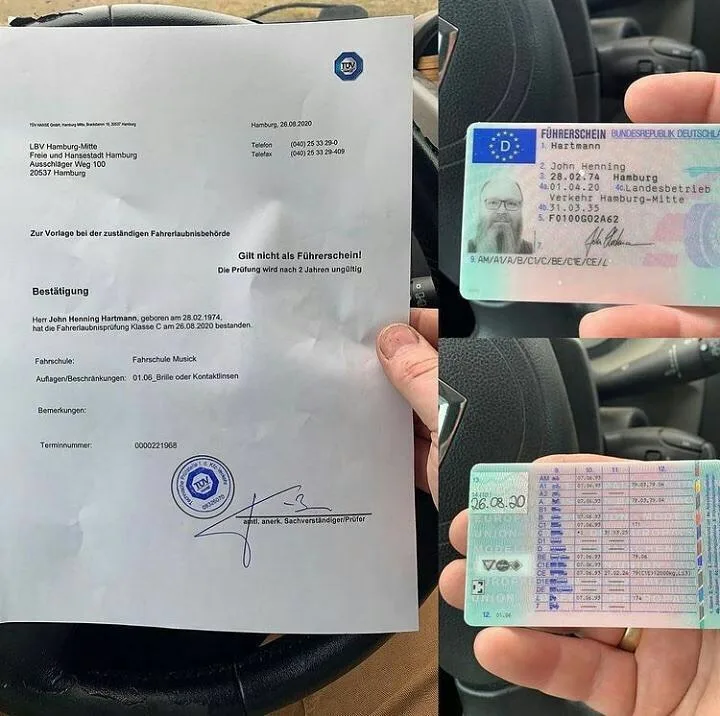
5. Get the License
Upon passing both the theoretical and practical tests, the candidate can send all documentation and receive their driving license.
Note: Applicants who have actually already held a driving license from another country may not require to finish all these actions, especially if their license is acknowledged by Germany.
Costs Involved
Acquiring a driving license in Germany involves several costs, which can vary depending on the driving school and area. Below is a rough quote:
| Item | Cost (approx.) |
|---|---|
| Driving School Enrollment | EUR1,000 - EUR2,000 |
| Theory Exam Fees | EUR30 - EUR50 |
| Practical Exam Fees | EUR100 - EUR200 |
| Other Costs (e.g., deutsche führerschein kaufen First Aid) | EUR30 - EUR100 |
Frequently Asked Questions (FAQ)
Q1: Can I drive in Germany with a foreign driving license?
Yes, foreign driving licenses are usually accepted in Germany, particularly for EU/EEA people. Non-EU people may be required to transform their licenses to a German one after a certain period.
Q2: What should I do if I lose my German driving license?
In the event of a lost license, candidates need to report the loss to the police and request a replacement at their regional licensing authority.
Q3: How long is a German driving license legitimate?
A German driving license is typically legitimate for 15 years. After this duration, it requires to be renewed, which may include brand-new vision tests or Eu-führerschein Kaufen other requirements.
Q4: Can I take driving lessons in English?
Many driving schools in bigger cities provide lessons in English. Make sure to inspect with the school ahead of time if language is a concern.
Q5: Are there any age exemptions for younger drivers?
Yes, individuals as young as 17 might obtain a "driving license for accompanied driving" (Begleitetes Fahren ab 17), allowing them to drive with a certified grownup.
Navigating the requirements for füHrerschein im ausland Kaufen obtaining a German driving license can be a challenging job, especially for newbies. Nevertheless, kann man legal einen führerschein kaufen by understanding the necessary documents, procedures, and costs included, individuals can better prepare themselves for success. With appropriate assistance, driving in Germany can be a gratifying experience that opens a world of travel chances. Whether for commuting, leisure, or adventure, a German driving license is a valuable possession in any resident's life.
등록된 댓글이 없습니다.