Lipo- Does It Last? And How Many Fat Cells Do We Have?
We metabolize fat by breaking the bonds in between the hydrogen, carbon and oxygen that make up a fat cell, setting the stored-up power free. In addition to that, the body is still in a recovery phase after dieting. Hunger hormonal agents remain high, metabolism stays somewhat lower, and psychological exhaustion from restriction sets in. You long for more food and really feel less satisfied by the exact same parts. Slowly, eating go back to old patterns, usually without realising it.
Levels of glucose are spotted by nutrient-sensing systems in both the periphery (94-- 98) and mind (96,99), with effects to power balance and gas usage in the periphery. Triglycerides may also be sensed using their suppositional effects on leptin and insulin transportation across the blood-- mind obstacle (9,100,101). FFAs are sensed, such as sugar, in the central and peripheral nutrient-sensing systems and can lower succeeding food intake when instilled right into the intestine (102,103), into the blood circulation (104) or directly right into the mind (105,106).
Fat Cells Have Resilient (epigenetic) Memory
- Research studies on semaglutide and on tirzepatide have actually revealed that significant weight regain takes place after their withdrawal6,59, showing that a minimum of these treatments do not induce steady, persistent adjustments.
- A good prospect is commonly a person near a suitable weight, healthy, and dealing with localized persistent fat instead of uncontrolled medical or weight-related concerns.
- Everybody's body reacts a little bit in a different way to food and physical activity modifications.
- For incorporated human adipocyte differential expression analysis quantification, non-coding transcripts were omitted.
- Interestingly, the phenomenon of epiAT shrinkage was currently observed throughout weight problems in 25-week HFD-fed (HH) mice, as previously reported45, Lymphatic Drainage and preserved after WL in HHC computer mice (Extended Data Fig. 5r-- v).
According to a current report, epiAT of HC mice was smaller than that of controls after WL18. Remarkably, the sensation of epiAT contraction was already observed during weight problems in 25-week HFD-fed (HH) computer mice, as formerly reported45, and preserved after WL in HHC mice (Extended Information Fig. 5r-- v). Adipocyte dimensions varied between depots, and adipocytes were enlarged in ingAT of H and HH mice and normalized after WL in HC, however not in HHC, mice (Extended Data Fig. 5w, Lymphatic Drainage x). EpiAT adipocytes were also enlarged and diminished to typical dimensions in H and HC computer mice, respectively, whereas in HH and HHC computer mice adipocytes were of equal size, possibly owing to the tissue shrinking (Extended Data Fig. 5v, y).
Get in touch with us today to arrange a FREE no-obligation assessment, educational products, and body-composition evaluation. For every hPTM, the raw filtered optimal matrices were log-normalized making use of the R package lawn edger and Pearson's connection coefficient was computed using the cor feature from the R bundle stats v. 3.6.2. ChromHMM was made use of to recognize regions in the genome that were noted by H3K4me1, H3K27ac and open (ATAC-- seq) yet not enriched for H3K4me3 which were not promoters (Extended Information Fig. 9b-- e). States 6 and 5 were chosen as enhancer areas on the basis of their genomic areas (distal enhancer elements) (Extended Data Fig. 9b-- e). The 4-- 5-week-old AdipoERCre x NuTRAP mice were gavaged 2 times with 1 mg of tamoxifen dissolved in corn oil. Tamoxifen was washed out for 2 weeks prior to starting HFD.
Wellness Categories To Discover
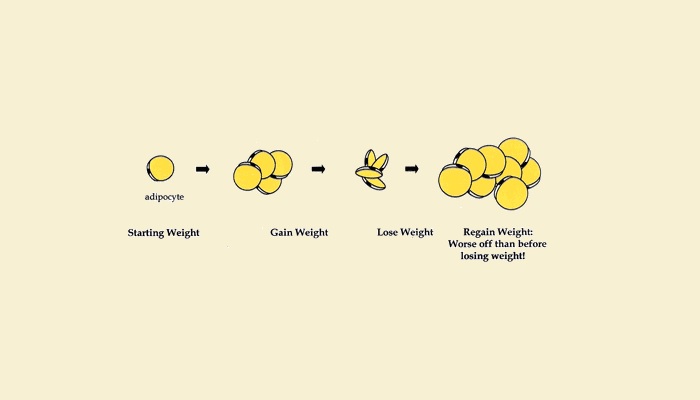
Conquering this barrier for long-term treatment success is challenging since the molecular devices underpinning this sensation continue to be greatly unidentified. Here, by using single-nucleus RNA sequencing, we reveal that both human and mouse adipose tissues preserve cellular transcriptional adjustments after considerable fat burning. Furthermore, we find relentless obesity-induced modifications in the epigenome of mouse adipocytes that negatively influence their function and response to metabolic stimuli. Mice carrying this obesogenic memory show increased rebound weight gain, and the epigenetic memory can clarify future transcriptional deregulation in adipocytes in feedback to more high-fat diet feeding.
Our raw optimal matter matrix was filtered for booster regions defined by chromHMM, and peaks around the TSS ( ± 2,000 bp) were thrown out. Affiliation of putative enhancers to genetics was done utilizing the R bundle ChIPSeeker by selecting the closest gene (TSS or genetics body) within 20,000 bp range. Putative enhancers farther away than 20,000 from a TSS or genetics body were not connected to any type of gene and were disposed of from downstream GSEA. Adipocyte chromatin states were determined making use of ChromHMM v. 1.22 (ref. 96) in concatenated setting with binned bam files (200-bp containers) from each problem integrating all hPTMs and ATAC-- seq . After final design selection75 with 8 chromatin states and exhaust parameter estimation of hPTMs and ATAC-- seq, chromatin state fold enrichment was performed against genomic attributes and inscribe candidate cis-regulatory elements.
"A great deal of times, we imitate a vacuum and draw our dish down, as opposed to make the effort to eat slowly and appreciate each bite," Peeke states. One very easy means to do this is simply to place your fork or spoon down for a few secs after each mouthful. Display your current eating and exercise behaviors making use of a notebook or an application. This will make you a lot Discover More Here aware of the selections you're making and can help direct you toward modification. If you want a simple means to develop a well balanced meal, try filling up fifty percent your plate with vegetables and fruits.
등록된 댓글이 없습니다.