From one quiet-morning service brief to posts, images, and a short vid…
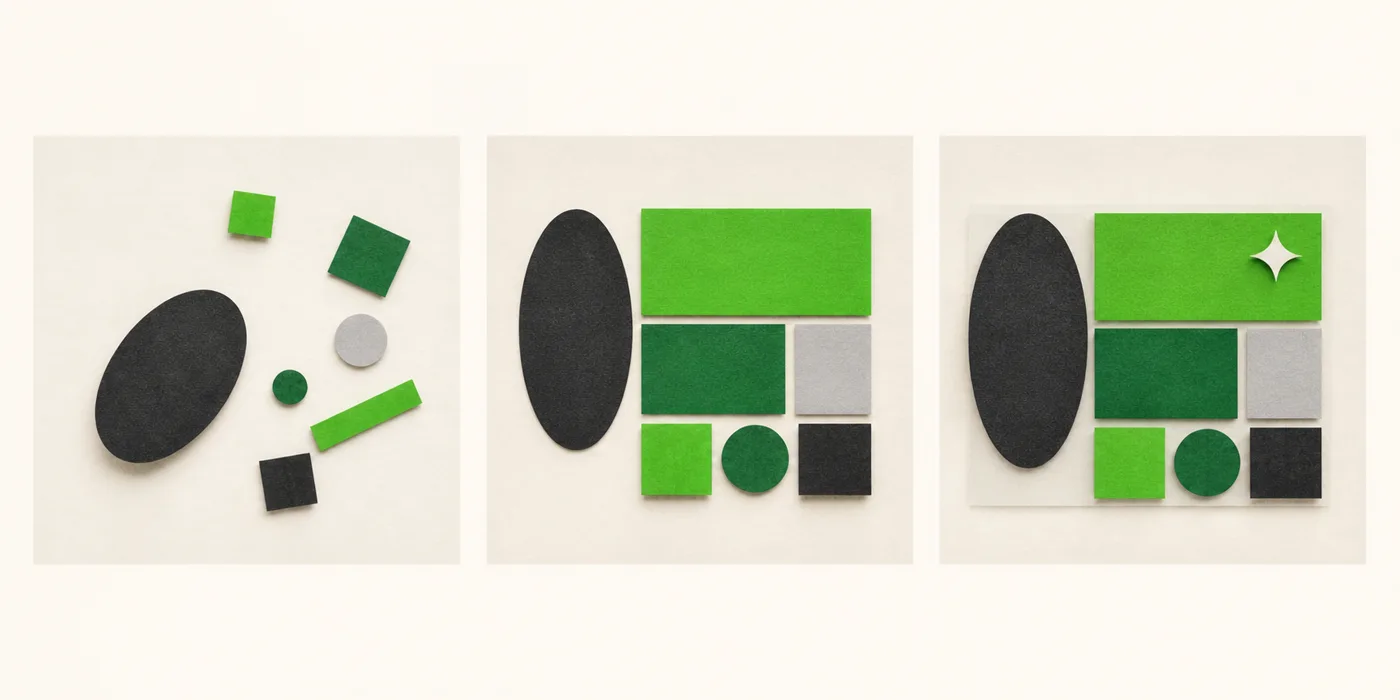
The team at the dog groomer needs to promote its quiet-morning service, but the folder contains notes and no coherent asset set. A decorative idea without a clear path for owners of nervous dogs to request a consultation will waste the small team's time. The producer organizes the assignment around brand voice control and uses a mobile readability problem as the first point of recognition.
The center of the one-page brief is simple: help owners of nervous dogs understand the quiet-morning service and decide whether to request a consultation. It sets the voice as gentle and trustworthy; requires approved offer wording, date, price, eligibility, fulfilment, and contact route; and bans invented scarcity, guarantees, and endorsements. The sheet records capitalization, prohibited language, claim sensitivity, reference rights, a 4:5 frame, phone-safe areas, a 30-second runtime, delivery formats, deadline, and reviewers. Approved facts are separated from questions and examples so assumptions cannot become public claims.
The writer requests several routes based only on the source page, leaving final copy until one route is approved. Four routes expose a mobile readability problem, show a three-step method, compare responsible choices, or document one decision at the dog groomer. The brand voice control objective favors the route with a visible action, a defensible claim, and an honest path to request a consultation.
Only the chosen argument becomes long copy, social caption, concise hook, five carousel cards, narration, and headline alternatives. Each card has one job: identify friction for owners of nervous dogs, list inputs, demonstrate a hypothetical decision, review it, then invite people to request a consultation. If a fact is absent, the draft carries an editor query and stops short of publication wording. A line stays only if it provides a method, example, criterion, or risk that changes the work.
The assignment's failure watchlist includes watermarks, unclear licenses, low resolution, and wasted review time. A system may also change the subject between frames, deform text or interfaces, miss cultural meaning, imitate a familiar mark, or describe an example as a real result. A second reviewer compares each output with the source, inspects artwork at full size, and reads the script without Prompt it. Shape it. Make it yours. history.
The visual is not decoration; it must place the product inside a believable daily routine within the quiet-morning service story. The prompt describes the quiet-morning service as subject, a foreground-to-background composition, one focal point, a restrained contextual background, cream, charcoal, and muted red, soft directional light, and a 4:5 frame. A clean text area is reserved for the designer, and the focal action remains legible on a small screen. 'Quiet Start' and 'Inside the Process' are hypothetical options for internal layout testing, not claims of availability or proof.
The schedule also reserves enough time for correction, source checks, and another careful final reading before any finished asset is queued. The minimum viable set for the quiet-morning service contains a master argument, a flexible visual frame, related caption copy, and a timed demonstration of the same decision. The owner reviews that chain before variants are made, because a weak assumption copied into twelve exports becomes harder to locate and more expensive to repair. A tracking row lists each asset, its purpose for owners of nervous dogs, source fact, format, status, next reviewer, and relationship to the action to request a consultation. The learning note defines one observable response, records date range and exposure, and avoids crediting a creative change for movement that the available evidence cannot explain. What the team learns is limited to this brand voice control test; it does not become a guarantee, invented success story, or broad claim about every audience. The operator uses descriptive file names, records approval beside the source, and separates superseded exports from current work; this reduces the chance that a polished rejection reaches a scheduled post. Before scheduling, the producer checks the actual derivatives in their destination previews for compression, crop, caption placement, links, and any change to the intended reading order.
Core facts stay fixed, while opening, order, pace, composition, and interaction are rebuilt for each destination. On a text feed, the producer explains the choice behind the quiet-morning service. An image feed foregrounds the visual task, while the carousel distributes the reasoning. The vertical clip puts a mobile readability problem in the first two seconds with large captions; a longer video retains the example and source notes; a community post asks one focused question before inviting people to request a consultation.
The 30-second vertical video answers one question: how the dog groomer turns scattered notes for the quiet-morning service into an approved direction. For three seconds, voiceover names a mobile readability problem, screen copy stays under five words, and the camera shows real planning notes after private details are removed. The next four seconds gather inputs, six compare hypothetical options, five show a reviewer correcting one flaw, and the final beat states the action. A six-column table stops narration, captions, visuals, timing, sourcing, and review responsibility from drifting apart.
The fact editor traces statements to approved inputs and dates any official-rule lookup; the copy editor checks audience, tone, spelling, case, and prohibited implications. Artwork is inspected at 100 percent and in place for text, symbols, hands, repeated objects, edges, light, interface plausibility, unintended marks, phone cropping, contrast, and reading order. A cold reviewer watches for changing objects, warped text, caption errors, unsafe margins, mispronunciation, uneven pace or audio, weak boundary frames, and lost meaning without sound. Sign-off follows when post, image, and clip agree on evidence, keep the gentle and trustworthy manner, and direct owners of nervous dogs honestly toward the choice to request a consultation.
Handoff keeps approved inputs, copy route, working text, layered design, captions, shot table, source notes, and checked exports under distinct names. With one source of truth, the producer can change a detail and identify every affected placement. For the dog groomer, the value is a smaller, reviewable set that gives owners of nervous dogs one consistent reason to consider the quiet-morning service.
In the source brief, the assigned search phrase represents a need to test image production while keeping cash cost low. The acceptance test is an export whose rights, limits, and cleanup cost are understood; speed alone is not an outcome. The phrase guides the job, but the quiet-morning service stays as the one illustrative case.
등록된 댓글이 없습니다.