A workflow focused on audience onboarding for promoting the mobility s…
A launch slot has opened for the mobility series, leaving the freelance fitness coach with little production time. Because it must reach desk workers, every asset has to explain the offer before asking people to join the email list. The producer organizes the assignment around audience onboarding and uses a repeated customer question as the first point of recognition.
In the source brief, the assigned search phrase represents a need to repair or adapt an existing campaign photograph. A draft advances only when it delivers consistent light, geometry, identity, and editable finishing. That reading keeps the story tied to the mobility series rather than turning it into a tool list.
The working brief fits on one page: the freelance fitness coach is promoting the mobility series to desk workers, and the single communication goal is to join the email list. Voice guidance says direct and encouraging, while the facts column holds timing, price, eligibility, fulfilment, and contact details. Guarantees and implied affiliations stay out. The sheet records capitalization, prohibited language, claim sensitivity, reference rights, a 9:16 frame, phone-safe areas, a 22-second runtime, delivery formats, deadline, and reviewers. Confirmed facts, open questions, and illustrative examples occupy separate columns.
The first writing pass produces four message routes, not a pile of final captions. The route board contains a common error tied to a repeated customer question, a compact workflow, a comparison, and a process note grounded in the freelance fitness coach. Selection follows the audience onboarding goal and rejects any route that needs a fabricated customer result.
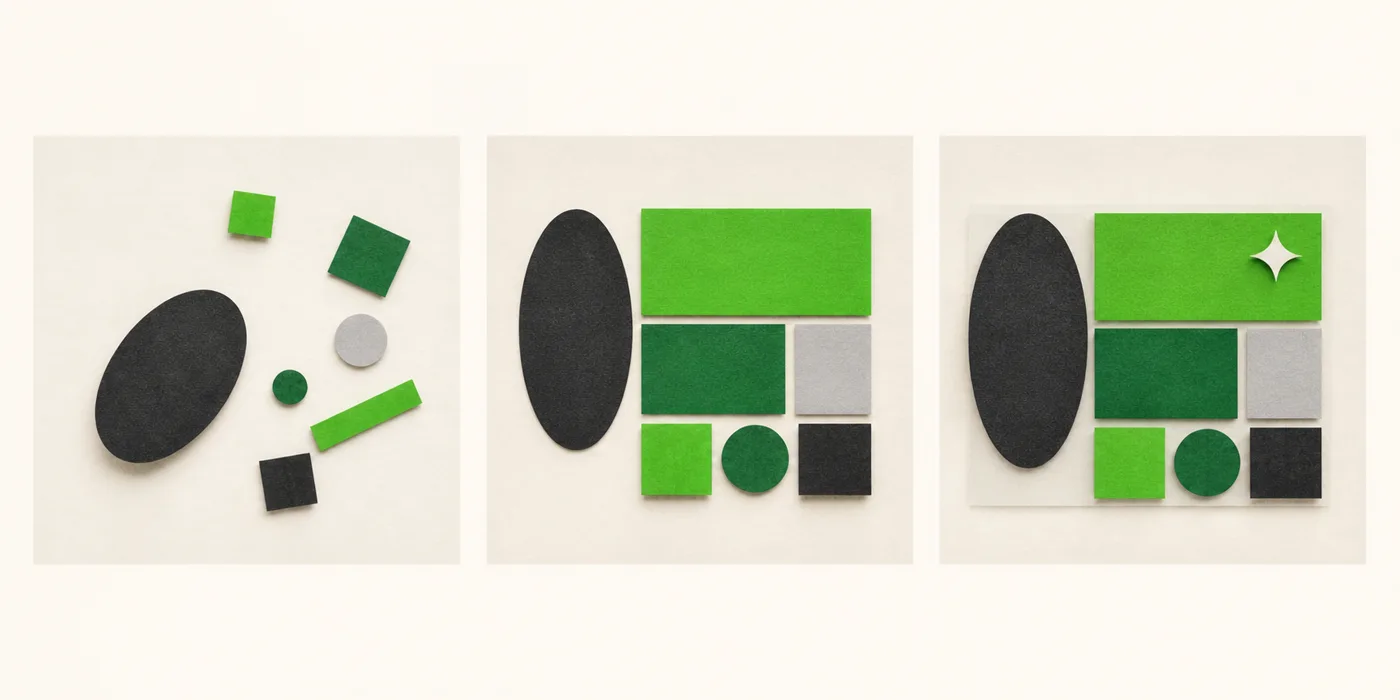
The approved route expands into one explanation, a caption, a two-line hook, a five-card carousel, a voiceover, and three headline options. The five cards move from audience problem to required facts, illustrative choice, human check, and the action to join the email list. A missing price, date, or eligibility detail becomes a question for the owner, never a confident sentence invented by the model. Sentences without a method, example, decision rule, or warning are removed.
The schedule also reserves enough time for correction, source checks, and another careful final reading before any finished asset is queued. The minimum viable set for the mobility series contains a master argument, a flexible visual frame, related caption copy, and a timed demonstration of the same decision. The owner reviews that chain before variants are made, because a weak assumption copied into twelve exports becomes harder to locate and more expensive to repair. The production board records the asset, audience purpose, supporting fact, destination format, approval state, reviewer, and how it helps people join the email list. Measurement uses a preselected behavioral signal rather than a vague impression; the owner records the publishing window and reach before interpreting inquiries, saves, or replies. What the team learns is limited to this audience onboarding test; it does not become a guarantee, invented success story, or broad claim about every audience. Version control is deliberately plain: drafts receive descriptive names, approval is written down, and obsolete exports move out of the active folder so nobody publishes an attractive but rejected file. The final preflight opens every destination file rather than trusting the master layout, since compression, crop behavior, caption placement, and link treatment can change after export.
For the image route, the single job is to show how one small action leads to the next step. The prompt describes the mobility series as subject, a foreground-to-background composition, one focal point, a restrained contextual background, cream, charcoal, and muted red, soft directional light, and a 9:16 frame. No essential detail enters the mobile crop or caption-safe margins; real copy is added later as an editable layer. For mockup purposes, 'Small Steps' and 'The Simple Route' are sample names added by a designer, with no claim of registration or approval.
The 22-second vertical video answers one question: how the freelance fitness coach turns scattered notes for the mobility series into an approved direction. For three seconds, voiceover names a repeated customer question, screen copy stays under five words, and the camera shows real planning notes after private details are removed. Shot two collects inputs for four seconds; shot three shows the illustrative choice for six; shot four pauses on a human correction for five; shot five uses the remaining time for the approved next step. The shot sheet separates voiceover, on-screen text, direction, duration, source or assumption, and review note into six columns.
The assignment's failure watchlist includes warped objects, changed faces, and mismatched shadows. A system may also change the subject between frames, deform text or interfaces, miss cultural meaning, imitate a familiar mark, or describe an example as a real result. An editor catches them by tracing claims to the source sheet, enlarging every image, and watching the final cut cold with sound off and then on.
Each channel receives a fresh edit of the approved argument rather than a resized duplicate. On a text feed, the producer explains the choice behind the mobility series. An image feed foregrounds the visual task, while the carousel distributes the reasoning. A phone-first clip names a repeated customer question within two seconds, a longer cut includes the review, and the community version asks for focused feedback tied to the choice to join the email list.
Human approval starts by matching every claim to confirmed inputs, checking current external rules against reliable sources, recording the access date, and testing audience fit and voice. Artwork is inspected at 100 percent and in place for text, symbols, hands, repeated objects, edges, light, interface plausibility, unintended marks, phone cropping, contrast, and reading order. The video reviewer checks object continuity, caption accuracy, safe placement, spelling, pronunciation, pacing, volume, first and last frames, and whether the story works on mute. The owner approves only when every format preserves the facts, keeps the voice direct and encouraging, and gives desk workers a credible path to join the email list.
The delivery record shows the path from confirmed material through approved message, editable design, timed script, and offical website final files. A late correction can flow through the set without forcing the owner to reconstruct which draft supplied a claim. For the freelance fitness coach, the value is a smaller, reviewable set that gives desk workers one consistent reason to consider the mobility series.
등록된 댓글이 없습니다.